
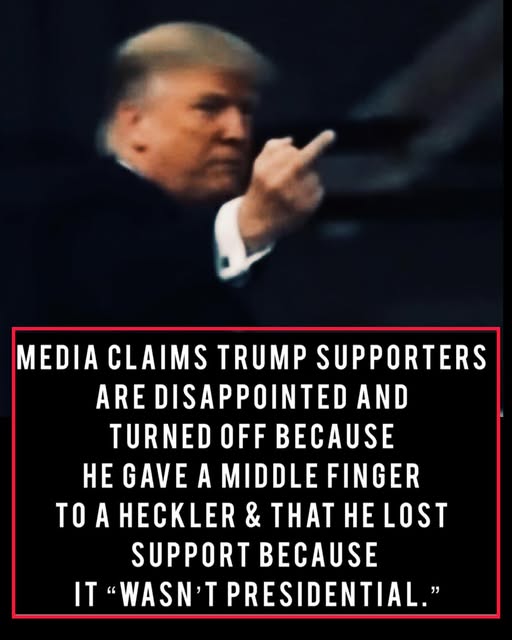
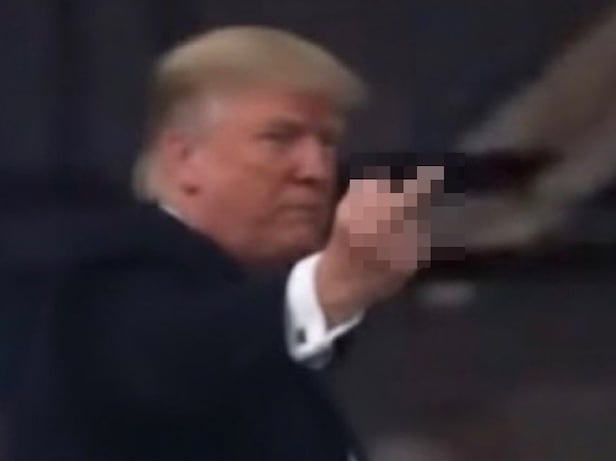
The US media has erupted into debate after a moment involving Donald Trump, captured on camera as he appeared to raise his middle finger toward a heckler during a recent public event. The image spread rapidly across social media platforms, quickly becoming a focal point for news coverage, opinion columns, and political commentary nationwide.
Several media outlets and commentators argued that the gesture was “unpresidential” and risked undermining Trump’s public image at a time when he is seeking broad voter support. From this perspective, critics say such behavior could alienate moderate or undecided voters who place importance on decorum and restraint in political leadership. Some analyses went further, suggesting the incident might cost Trump support by reinforcing negative perceptions already held by his opponents.
In contrast, many of Trump’s supporters have pushed back strongly against this interpretation. Across conservative media spaces and social platforms, supporters contend that the moment has been exaggerated or taken out of context. They argue that Trump was responding to provocation from a heckler and that the gesture does not define his leadership style or political agenda. To them, the incident reflects Trump’s well-known confrontational and direct approach—traits they see as authenticity rather than a flaw.
The polarized reaction underscores a longstanding tension between mainstream media narratives and Trump’s core base. Supporters often accuse the media of selectively highlighting controversial moments while ignoring context, thereby amplifying outrage to fit preconceived narratives. Journalists, on the other hand, maintain that scrutinizing such behavior is part of their responsibility, especially when evaluating the conduct and standards expected of political leaders.
Media analysts note that in today’s fast-moving digital environment, short clips and striking images can take on a life of their own. A single gesture lasting only seconds can dominate headlines and online discussions for days, sometimes overshadowing policy debates or substantive campaign issues. As a result, the line between straightforward reporting, commentary, and opinion-driven framing has become increasingly blurred.
From a political strategy standpoint, the incident may have limited impact on Trump’s loyal supporters, who are accustomed to his combative style and often view media criticism as unfair or biased. In some cases, controversies like this can even strengthen solidarity within his base, reinforcing a shared sense of opposition to mainstream media. However, the effect on undecided voters remains uncertain, as this group tends to be more sensitive to questions of temperament and presidential conduct.
Ultimately, the controversy illustrates how deeply polarized the US political and media landscape has become. Whether viewed as a lapse in decorum or a spontaneous response to provocation, the episode has fueled broader debates about media influence, leadership standards, and how political behavior is interpreted in the age of social media. More than the gesture itself, the reaction to it highlights the ongoing struggle over who shapes political narratives—and how much power a single viral moment can hold.