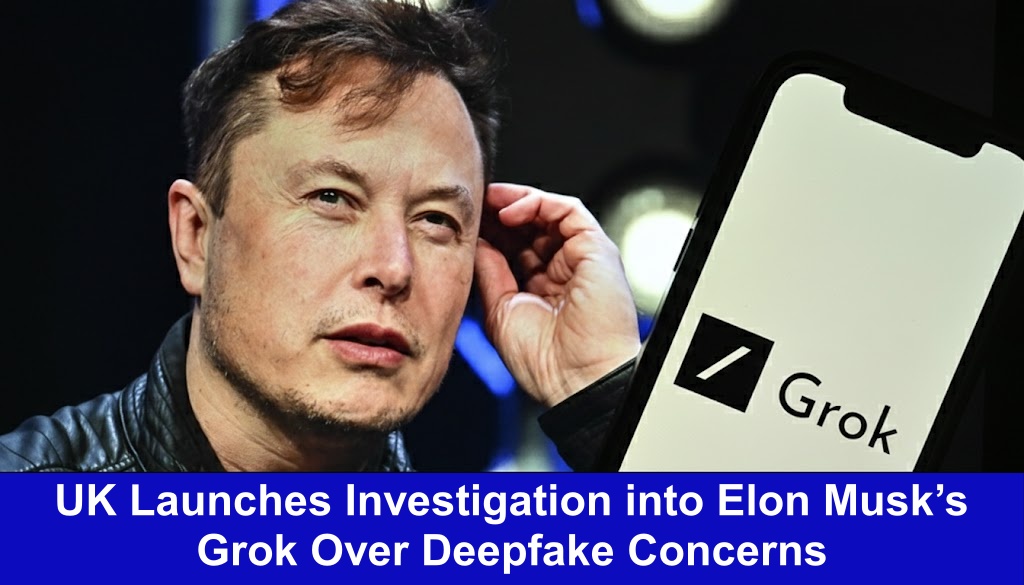
The United Kingdom has officially launched an investigation into Grok, the artificial intelligence chatbot associated with companies led by Elon Musk, following growing concerns about the creation and spread of “deeply concerning” deepfake content. The move underscores the UK’s increasingly firm stance on regulating AI technologies that could pose risks to society, politics, and information security.
According to officials, UK regulators are examining whether Grok complies with national safety standards and platform responsibilities under the country’s Online Safety framework. At the center of the inquiry is the threat posed by deepfakes—AI-generated images, videos, or audio that convincingly mimic real people—potentially misleading the public, damaging reputations, or interfering with democratic processes such as elections.
Grok is integrated into the social media platform X (formerly Twitter) and has gained attention for its more direct tone and reportedly lighter moderation compared with many other AI systems. While that approach has attracted users seeking fewer restrictions, it has also raised alarms among policymakers who worry that weaker safeguards could make it easier for harmful or deceptive content to proliferate.

UK authorities stress that the investigation is not aimed at an individual, but at assessing systemic risks and the responsibilities of technology platforms operating at scale. As deepfake technology becomes more sophisticated, officials argue that distinguishing real content from fabricated material is increasingly difficult, threatening public trust and opening the door to large-scale manipulation.
Elon Musk has previously defended a “free speech–oriented” approach to AI development, warning that excessive restrictions could stifle innovation. However, European policymakers have consistently countered that innovation must be balanced with accountability—especially when technologies have wide-reaching societal impact. The UK probe is therefore seen as a significant test of how far a lighter-moderation AI model can operate within stricter regulatory environments.
The move also reflects a broader European trend toward tougher oversight of AI compared with the United States. Across the continent, governments are building regulatory frameworks that categorize AI systems by risk level, with deepfake-related capabilities falling into higher-risk categories that require closer supervision. Although the UK is no longer part of the European Union, its decision to scrutinize Grok signals a desire to remain at the forefront of AI governance.

Analysts say the outcome of the investigation could set an important precedent for other AI platforms operating in the UK. If regulators identify shortcomings, they may require stronger content controls, changes to algorithmic design, or impose financial penalties. Conversely, if Grok is found to meet safety expectations, it could strengthen arguments that less restrictive AI models can still function responsibly.
Beyond potential enforcement actions, the case highlights how deepfakes have evolved from a niche technical issue into a matter of public policy and national concern. The ability to fabricate realistic content at scale raises questions not only about platform responsibility, but also about how societies protect truth and trust in the digital age.
As AI development accelerates, the UK’s investigation into Grok signals that governments are no longer willing to rely solely on voluntary safeguards. Instead, they are moving to define clearer boundaries between technological innovation and social responsibility—boundaries that companies led by figures like Elon Musk may increasingly be required to navigate.