
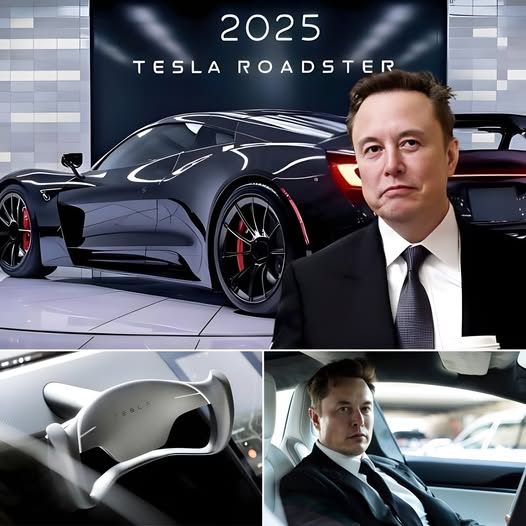
The Tesla Roadster has remained one of the most talked-about names in the electric vehicle world ever since the second-generation model was unveiled years ago. As 2025 approaches, excitement has surged once again after Tesla CEO Elon Musk renewed his promise that the upcoming Roadster will push performance far beyond the limits of today’s supercars.
From the moment it was first introduced, the new Roadster stunned the automotive world with headline-grabbing claims. Tesla projected jaw-dropping figures such as 0–60 mph acceleration in under two seconds, a top speed exceeding 250 mph, and a driving range of up to 620 miles on a single charge. These numbers, if realized, would place the Roadster in a category few vehicles—electric or gasoline-powered—have ever reached.

Despite the hype, the Roadster project has faced multiple delays since its original reveal in 2017. Tesla has repeatedly pushed back the production timeline, prioritizing mass-market vehicles and other strategic initiatives. Most recently, indications suggest that a production-ready version may appear around 2026, with manufacturing potentially following afterward. While this has tested the patience of fans and reservation holders, Musk has continued to insist that the wait will be worth it.
In recent statements, Musk has described the Roadster as more than just a fast electric car. According to him, it is intended to showcase “next-level” technology, redefining what drivers expect from performance vehicles. These remarks have reignited speculation across the automotive community, especially among enthusiasts eager to see how far Tesla is willing to push innovation.
One of the most intriguing ideas associated with the Roadster is the rumored “SpaceX package.” This optional configuration has been described as featuring cold gas thrusters designed to enhance acceleration, cornering, and braking. While Musk has mentioned the concept publicly, it remains unclear whether such a system will make it into the final production model or remain a bold experimental vision.
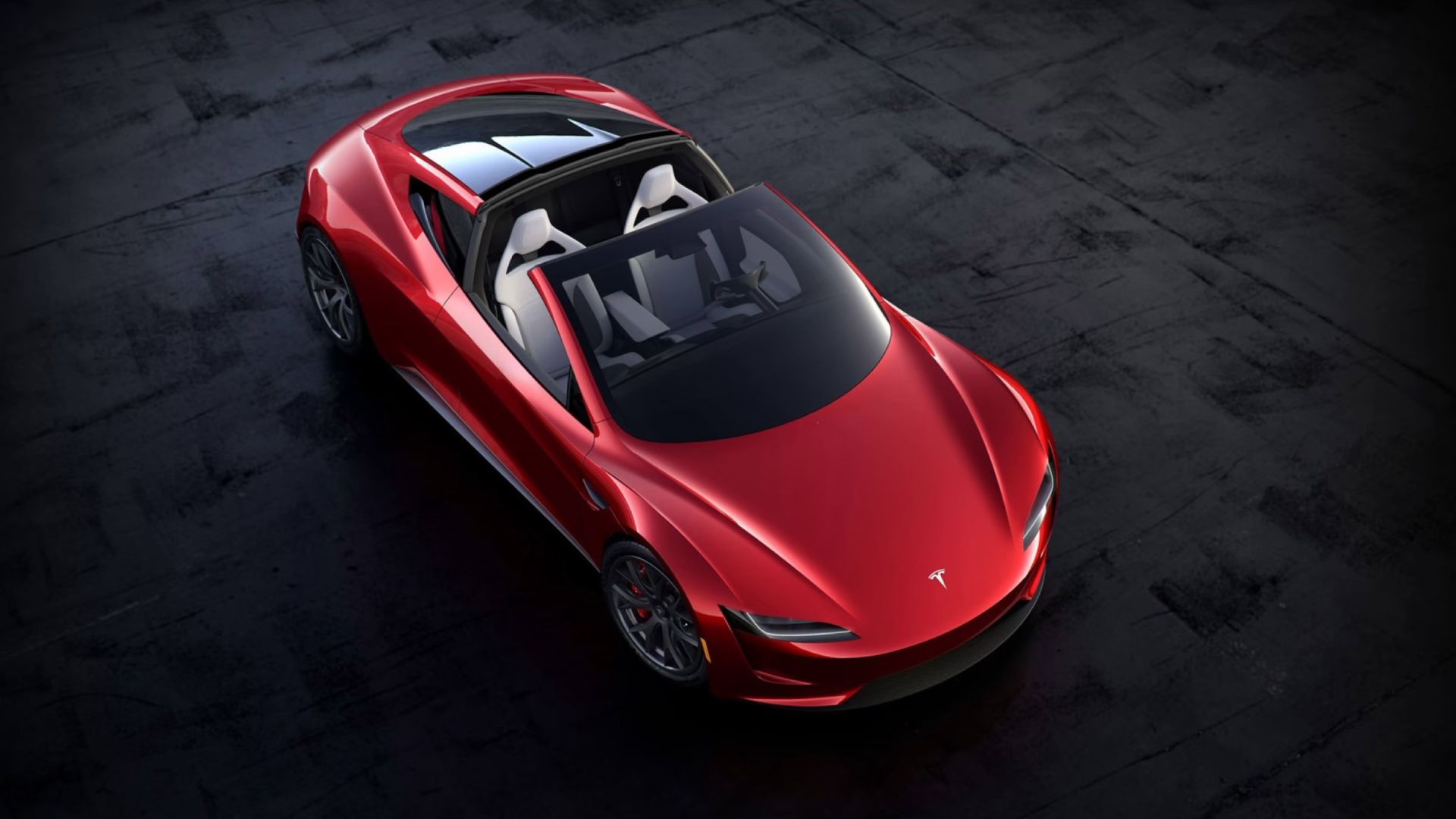
Tesla insiders and designers have also hinted that the Roadster is being developed as a driver-focused machine, blending extreme speed with cutting-edge engineering. The goal, they say, is to create a car that delivers an unforgettable experience while challenging traditional definitions of what a supercar can be in the electric era.
Still, skepticism remains. Industry analysts point out that Tesla’s history of ambitious promises and shifting timelines means expectations should be tempered. Translating groundbreaking ideas into a mass-producible vehicle is no small task, especially when aiming to outperform the world’s fastest supercars.
In the end, the Tesla Roadster 2025 stands as one of the most ambitious automotive projects of the decade. If Elon Musk’s promises become reality, it could redefine performance standards across the industry. Until the car officially hits the road, however, the Roadster remains a powerful symbol of Tesla’s vision—bold, controversial, and full of possibilities.