
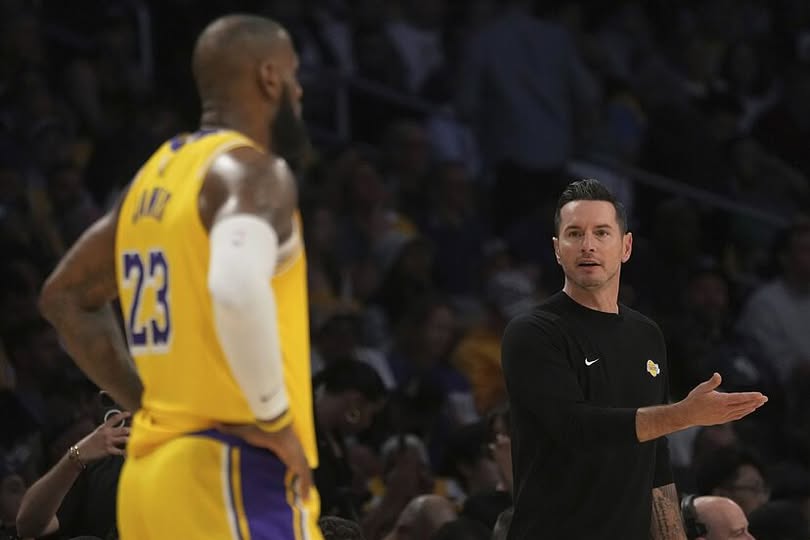
The return of LeBron James was expected to be a major boost for the Los Angeles Lakers, but the on-court reality has proven more complicated. Following a stretch of inconsistent performances, head coach JJ Redick openly acknowledged that the team has struggled with organization since LeBron rejoined the lineup.
Speaking after the game, Redick did not shy away from responsibility. He stated: “Since we’ve gotten Bron back, we haven’t been as organized offensively. Too many random possessions. That’s on me. It’s those 3 things: defensive clarity, role clarity and offensive organization.” The candid remark stood out as a rare moment of accountability, signaling that the Lakers’ coaching staff is confronting internal issues head-on rather than placing blame on any individual player.
According to Redick, the Lakers’ biggest problem is not LeBron’s individual performance, but how the team functions around him. Since LeBron’s return, the Lakers’ offensive rhythm has often appeared disjointed, with possessions lacking structure and flow. Too many plays have devolved into improvised actions, making it difficult for the team to apply sustained pressure on opposing defenses.

Redick emphasized three core areas where the Lakers are currently falling short: defensive clarity, role clarity, and offensive organization. Defensively, the team has shown lapses caused by inconsistent communication and rotations. In terms of roles, several players are still adjusting to their responsibilities when LeBron is handling the ball more frequently, leading to hesitant movement and mistimed decisions. Offensively, the execution of set plays has been uneven, resulting in stalled possessions and missed opportunities.
Notably, Redick made it clear that he was not pointing the finger at LeBron. On the contrary, he placed the responsibility on himself and the coaching staff for not adapting quickly enough to maximize LeBron’s presence within the system. This perspective suggests that the Lakers are still in a transition phase, searching for the right balance between leveraging LeBron’s superstar impact and maintaining cohesive team basketball.
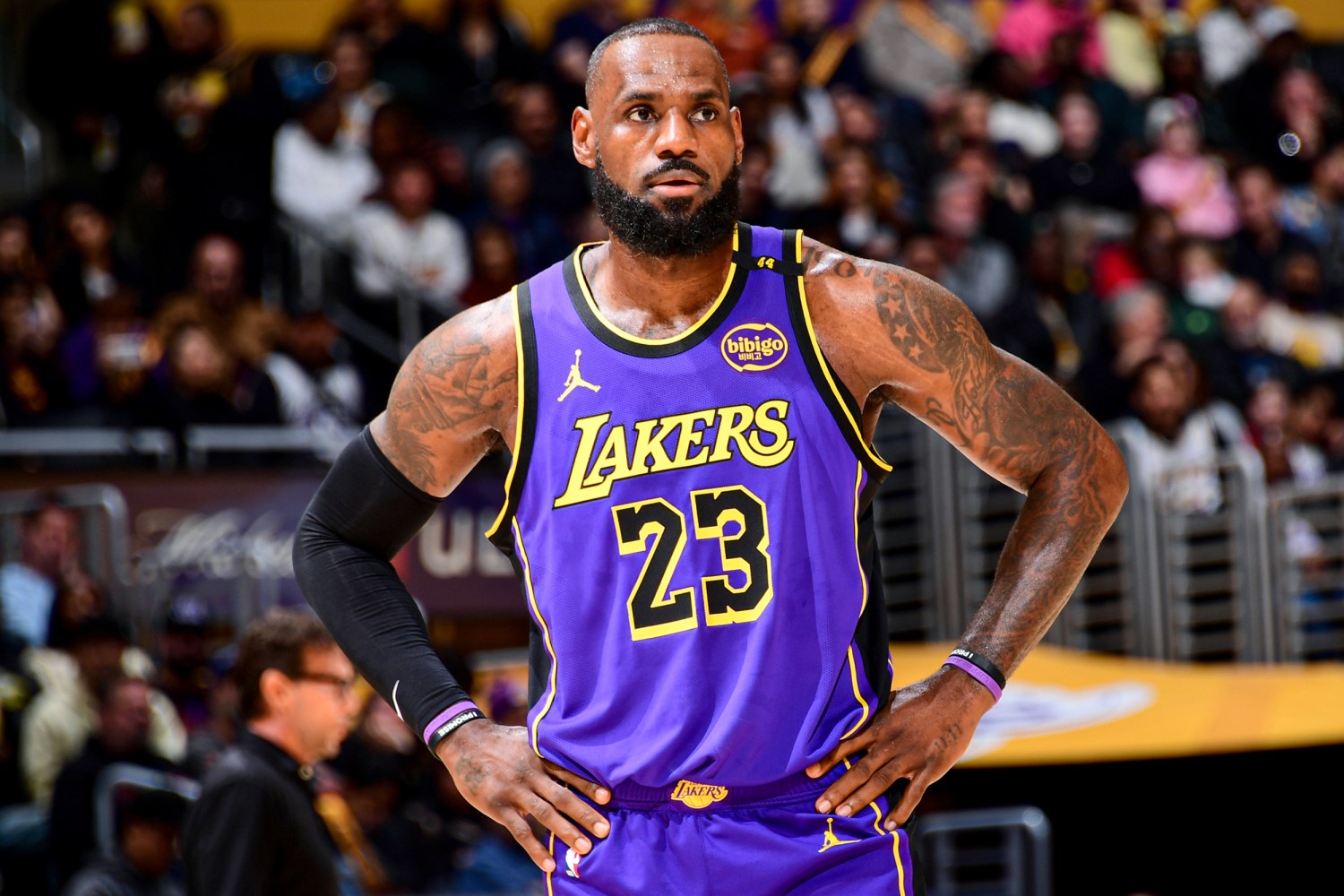
As the season enters a critical stretch, Redick’s comments carry more weight than simple criticism. The Lakers remain a veteran-heavy roster with playoff ambitions, but competing with the league’s elite will require swift solutions to their organizational issues. LeBron’s return provides opportunity, but it also demands tactical adjustments to ensure the entire roster operates with clarity and purpose.
Ultimately, Redick’s admission reflects the Lakers’ current reality: elite talent alone is not enough. Organization, defined roles, and consistent execution are essential. If the Lakers can address the three areas Redick highlighted, they have the potential to turn this challenging period into a foundation for a stronger push as the season progresses.