
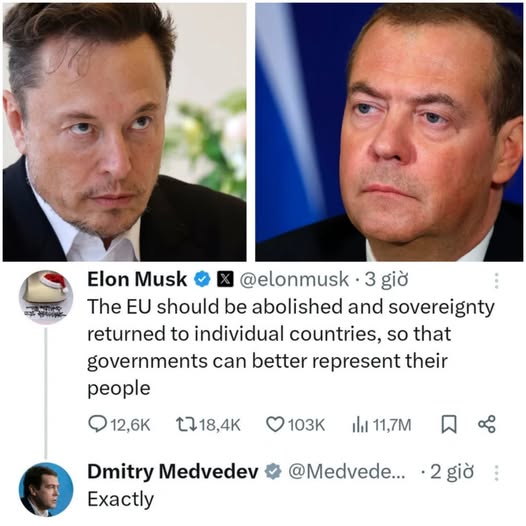
The European Union (EU) is facing one of its most intense confrontations with the global tech sector after imposing a €120 million fine on X (formerly Twitter). The decision triggered a fierce backlash from Elon Musk, who described the penalty as politically motivated rather than a straightforward enforcement of the law. The dispute took an unexpected geopolitical turn when former Russian President Dmitry Medvedev publicly voiced his support for Musk, pushing the controversy far beyond the tech sphere.
According to the EU, X violated the Digital Services Act (DSA), particularly provisions related to advertising transparency and the risk of misleading users through its paid verification system. Regulators argue that selling verification checkmarks could cause users to mistake paid accounts for officially verified or trustworthy sources, potentially undermining trust and distorting the online information ecosystem.
Elon Musk responded with fury. In a series of posts on X, he labeled the fine “insane” and claimed the EU was not merely targeting a company, but attacking him personally. Musk accused European regulators of abusing the DSA to exert control over online speech and went even further by making a highly controversial statement: calling for the dismantling of the EU and the return of sovereignty to individual nations.

Unsurprisingly, Musk’s remarks set off a wave of global debate. Supporters argued that the EU is overreaching and placing excessive pressure on Big Tech, creating dangerous precedents for government interference in global digital platforms. Critics of the bloc warned that overly rigid enforcement of legislation like the DSA could stifle free expression and slow innovation through heavy-handed regulation.
The controversy escalated when Dmitry Medvedev, Deputy Chairman of Russia’s Security Council, responded publicly with a one-word endorsement: “Exactly.” Though brief, the comment carried significant weight, pushing the dispute into the realm of geopolitics. For many observers, the situation now reflects deeper ideological differences over how digital platforms should be governed and who should control the global flow of information.
From the EU’s perspective, the fine is both lawful and necessary. European officials insist that the DSA exists to protect users, ensure transparency, and hold powerful online platforms accountable. No individual or corporation—regardless of wealth or influence, they argue—should be above the law. In their view, Musk’s reaction only reinforces the need for stronger oversight of global tech giants.
Adding to the complexity, several U.S. officials and commentators have criticized the EU’s action, suggesting it risks infringing on free speech and could strain transatlantic relations. The dispute highlights a fundamental divide between regulatory philosophies: Europe’s preference for strong oversight versus the U.S. tradition of emphasizing market freedom and open expression.
As of now, Elon Musk has not announced specific retaliatory measures in response to the fine. However, given the increasingly confrontational tone of his statements, analysts believe the standoff between Musk and the EU is far from over. Regardless of how it unfolds, the clash has become a global focal point—raising critical questions about regulation, corporate power, and the future of free expression in the digital age.