
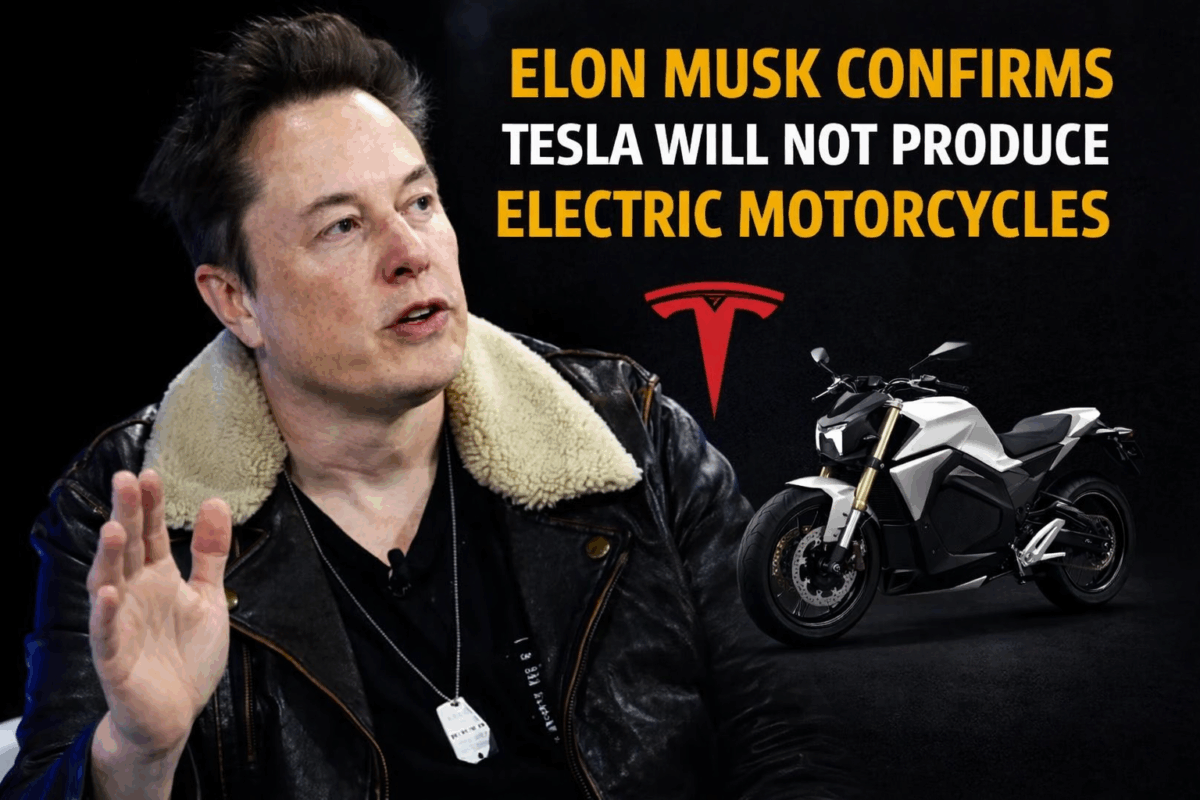
As the global electric vehicle market continues to expand into new segments—from cars and e-bikes to scooters and electric motorcycles—many people have expected Elon Musk to take Tesla one step further by entering the electric motorcycle space. However, Musk has repeatedly made it clear that Tesla will not produce electric motorcycles, and his stance has remained unchanged over the years.
According to Musk, the primary reason behind this decision is safety. Motorcycles, whether powered by gasoline or electricity, carry significantly higher risks compared to cars. Riders have minimal physical protection in the event of a crash, while Tesla’s core philosophy since its founding has been to reduce user risk through advanced technology.
Musk has also shared that his position is shaped by a deeply personal experience. He once lost a close friend in a motorcycle accident, an event that left a lasting impact on how he views two-wheeled vehicles. From his perspective, developing a product that inherently exposes users to greater danger—even if it has strong commercial potential—runs counter to Tesla’s long-term mission and values.
Beyond safety concerns, the decision reflects Tesla’s broader strategic focus. Rather than spreading its resources across multiple vehicle categories, Tesla has chosen to concentrate on areas where it believes it can make the greatest impact. These include electric cars, battery technology, artificial intelligence, autonomous driving systems, robotics, and energy solutions. All of these fields align closely with Tesla’s strengths in software, data, and large-scale technological integration.
Another important factor is that many of Tesla’s most advanced technologies—such as Autopilot and Full Self-Driving—are extremely difficult to apply safely to motorcycles. Two-wheeled vehicles have fundamentally different dynamics from cars, particularly when it comes to balance, stability, and environmental response. This makes the integration of autonomous or semi-autonomous systems far more complex and potentially dangerous.
Musk’s firm rejection of electric motorcycles has also served to shut down recurring rumors that circulate online. Whenever the electric motorcycle market gains momentum, speculation often resurfaces suggesting Tesla might enter the segment. Musk’s consistent messaging, however, shows that Tesla is not interested in chasing every emerging trend, but instead remains committed to a clearly defined roadmap.

From a broader perspective, this decision highlights Elon Musk’s approach to innovation: not everything that can be built should be built. For Musk, new products must align with long-term vision, safety principles, and social responsibility. While many companies race to diversify their product lines, Tesla is willing to forgo an attractive market segment in order to stay true to its core priorities.
In conclusion, Elon Musk’s confirmation that Tesla will not produce electric motorcycles is not a spontaneous choice, but the result of a consistent philosophy centered on safety, strategic focus, and technological direction. While some fans may find the decision disappointing, it underscores Tesla’s disciplined approach to shaping the future of transportation and energy.