
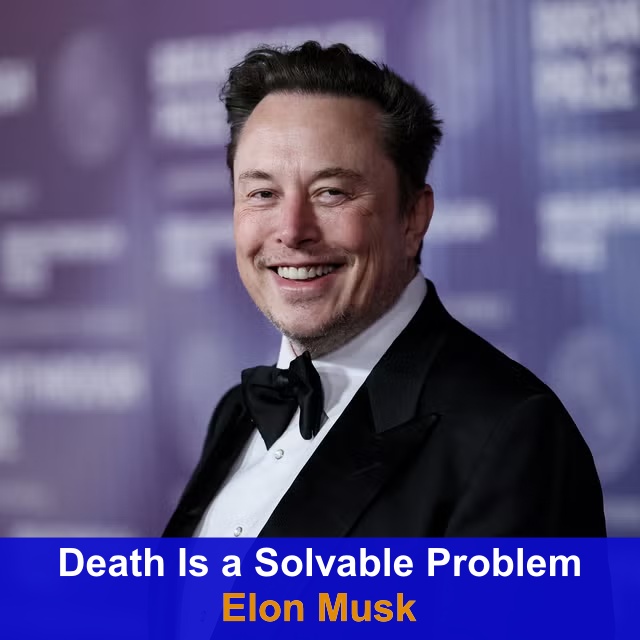
A recent statement by Elon Musk has once again become the center of global debate after he declared that “death is a solvable problem.” The short but provocative remark quickly spread across social media, igniting both curiosity and skepticism among the public, scientists, and those concerned with the future of humanity.
According to Musk, aging and death should not be viewed as immutable laws of nature, but rather as scientific challenges that have yet to be fully solved. He argues that rapid advances in biotechnology, artificial intelligence, and regenerative medicine could dramatically extend human lifespan—potentially leading to what he describes as “semi-immortality,” a state in which humans would no longer die from old age but only from rare diseases or accidents.
This perspective is not entirely new within the tech world. For years, Musk and other Silicon Valley figures have shown interest in anti-aging research, gene editing, brain–machine interfaces, and emerging technologies aimed at prolonging human life. However, by explicitly framing death itself as “a solvable problem,” Musk has pushed the conversation into far more provocative territory, touching on fundamental questions about the limits of science and human ethics.

Public reaction to the statement has been sharply divided. Supporters argue that Musk is fulfilling his familiar role as a visionary, challenging society to reconsider boundaries long accepted without question. They note that many technologies once dismissed as unrealistic—such as space travel, the internet, or reusable rockets—became reality precisely because bold thinkers refused to accept conventional limits. From this viewpoint, questioning the inevitability of death could help accelerate breakthroughs in medical science.
Critics, however, urge caution. Many scientists and ethicists argue that while human lifespan may indeed be extended, declaring death “solvable” oversimplifies an extraordinarily complex biological reality. Aging is not a single disease, they emphasize, but a collection of interrelated cellular and systemic processes that degrade over time. Moreover, critics warn of the broader societal consequences if extreme life extension becomes possible—ranging from population pressure and environmental strain to deepening inequality in access to life-extending technologies.
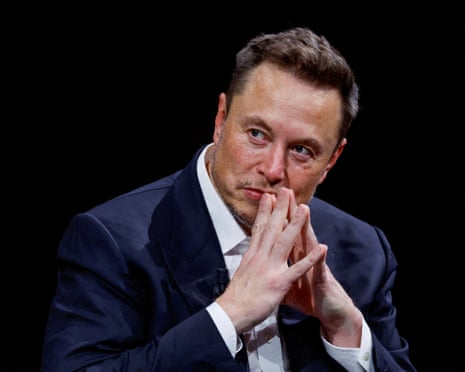
The debate also raises questions about the influence of powerful tech leaders on public discourse. Given Musk’s enormous global reach, his statements often transcend personal opinion, shaping conversations about research priorities, investment trends, and even philosophical views on life and mortality. Some observers worry that such narratives may create unrealistic expectations about the pace and feasibility of scientific progress.
Whether viewed as bold inspiration or excessive optimism, Musk’s remarks have undeniably succeeded in capturing public attention. The question of whether death can ever be conquered may remain unanswered for decades, but the discussion it has triggered reflects a timeless human desire: to overcome our own limitations. Once again, Elon Musk has positioned himself at the center of a conversation that few can ignore—challenging humanity to imagine a future far beyond what is currently known.