
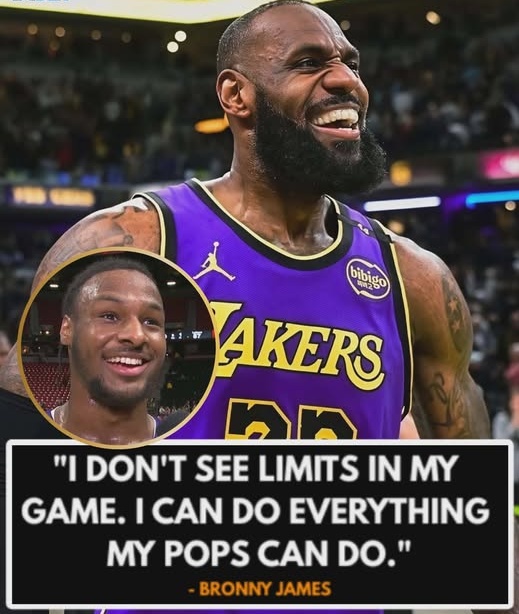
As he heads into a new season with the Los Angeles Lakers, Bronny James continues to attract significant attention from fans and media alike—not only because he is the son of LeBron James, but also due to the confidence and ambition he has shown as a young player trying to establish his own identity in the NBA. Recently, Bronny sparked widespread discussion after sharing his thoughts on his potential ahead of the upcoming season.
In an image that quickly circulated on social media, Bronny James was quoted as saying:
“I don’t see limits in my game. I can do everything my pops can do.”
The quote immediately ignited debate. Some fans felt Bronny was placing himself in direct comparison with LeBron James—one of the greatest players in NBA history. However, when viewed in proper context, the statement is less about comparison and more about mindset. It reflects the confidence of a young player who believes in his ability to grow and improve, rather than a claim of equal greatness.

In reality, Bronny James has never stated that he is on the same level as his father. By saying he “doesn’t see limits,” Bronny is expressing belief in his all-around development—offense, defense, playmaking, and basketball IQ. In today’s NBA, that type of self-belief is not arrogance; it is often a requirement for survival in an extremely competitive environment.
Entering his second season, Bronny is expected to show noticeable growth compared to his rookie year, which was largely about adjustment and learning. Last season, his opportunities were limited, and he faced the usual challenges of a young player adapting to the speed, physicality, and mental demands of professional basketball. That experience, however, gave him a clearer understanding of what it takes to compete at the highest level.
Carrying the James name is both an advantage and a burden. Bronny benefits from elite training resources, mentorship, and firsthand knowledge from one of the greatest basketball minds ever. At the same time, he is under constant scrutiny. Every performance and every quote is magnified, often taken out of context, and immediately compared to LeBron’s legendary career.
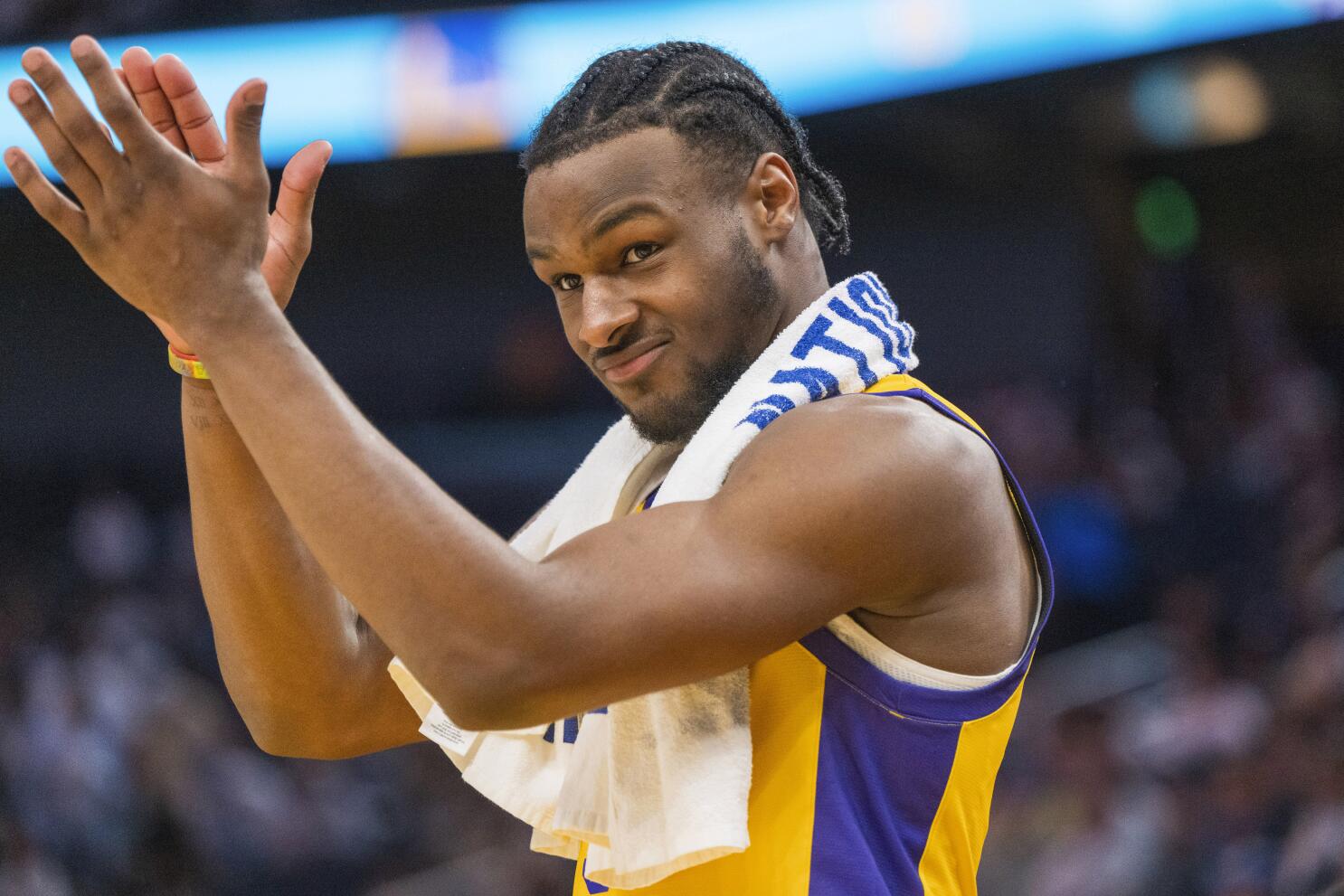
LeBron James himself has repeatedly said that he does not want his son living under his shadow. He has emphasized that Bronny should be evaluated as his own player, with his own strengths and career path. In practice, however, separating Bronny from his father’s legacy is nearly impossible. In that sense, Bronny’s confidence can be seen as a way of coping with and pushing back against overwhelming expectations.
From a basketball perspective, Bronny is not viewed as an instant high-volume scorer or franchise star. His strengths lie in defense, team play, and basketball intelligence. If he continues developing in those areas, he can realistically become a valuable rotation player for the Lakers, rather than being forced into the unfair role of becoming “the next LeBron.”
Ultimately, Bronny James’ statement should be understood as a declaration of belief, not bravado. In a league where confidence is essential, refusing to place limits on himself may be the first step toward carving out his own path—regardless of the comparisons and debates that inevitably follow.