
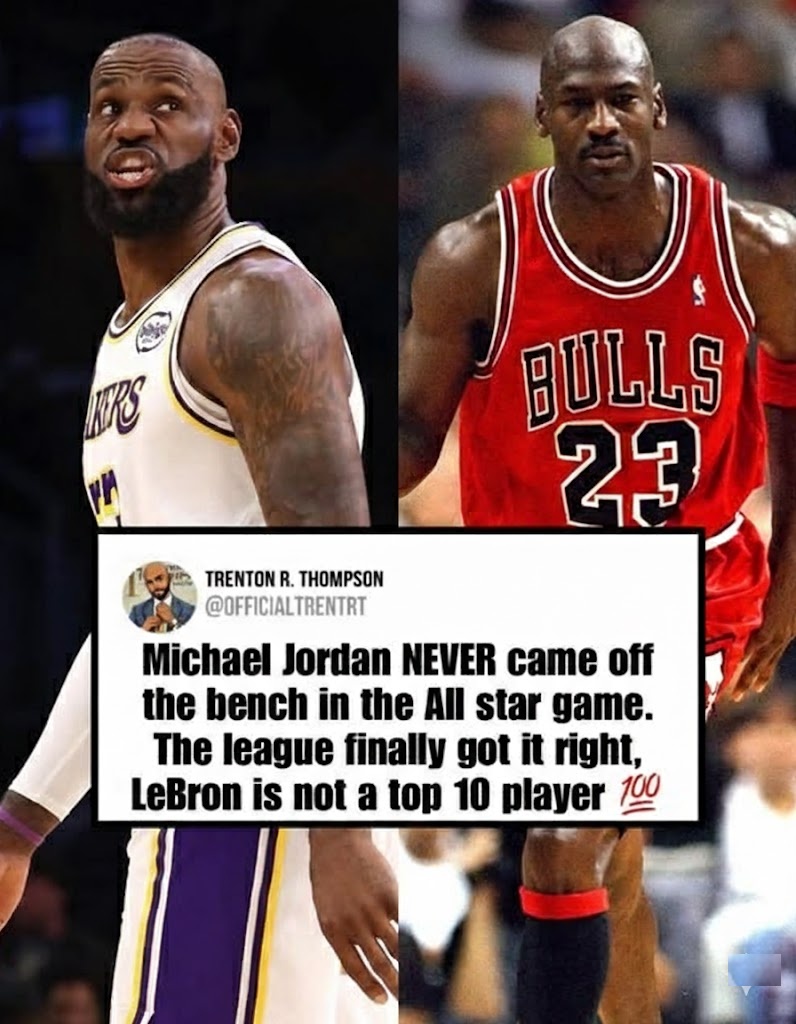
With just a short statement, Trenton R. Thompson ignited a wave of controversy across NBA social media. The quote “Jordan never came off the bench in the All-Star Game, LeBron isn’t top 10” spread rapidly, drawing thousands of polarized reactions and once again splitting fans into two familiar camps: Jordan versus LeBron.
On the surface, the remark leans on a specific detail: Michael Jordan never entered an All-Star Game as a bench player during his career. For many Jordan supporters, this fact symbolizes his “untouchable” status at his peak—a star who was always the automatic choice. From that perspective, Jordan’s consistent role as a starter reflects absolute respect from the league and fans of his era.
The truly explosive part of the statement, however, lies in the second clause: “LeBron isn’t top 10.” This claim immediately hit a nerve, because LeBron James has long been ranked among the greatest players in basketball history and is frequently placed alongside Jordan in the GOAT debate. Excluding LeBron from the top 10 was widely seen as extreme, lacking foundation, and designed more to provoke than to analyze.

LeBron’s supporters pushed back forcefully, arguing that using a single criterion—especially one as symbolic as All-Star starting status—to dismiss an entire career is fundamentally unfair. They point to LeBron’s monumental résumé: the all-time scoring record, repeated Finals appearances, rare longevity, and the ability to remain elite for more than two decades. In their view, these achievements provide a far more comprehensive measure of historical greatness.
On the other side, a segment of Jordan’s fan base believes Thompson’s comment reflects a broader sentiment among those who prioritize “peak dominance” over longevity. To them, Jordan represents absolute supremacy compressed into a shorter but incandescent prime, while LeBron embodies sustained excellence over time. This difference in evaluative philosophy—peak versus duration—only intensifies the argument.
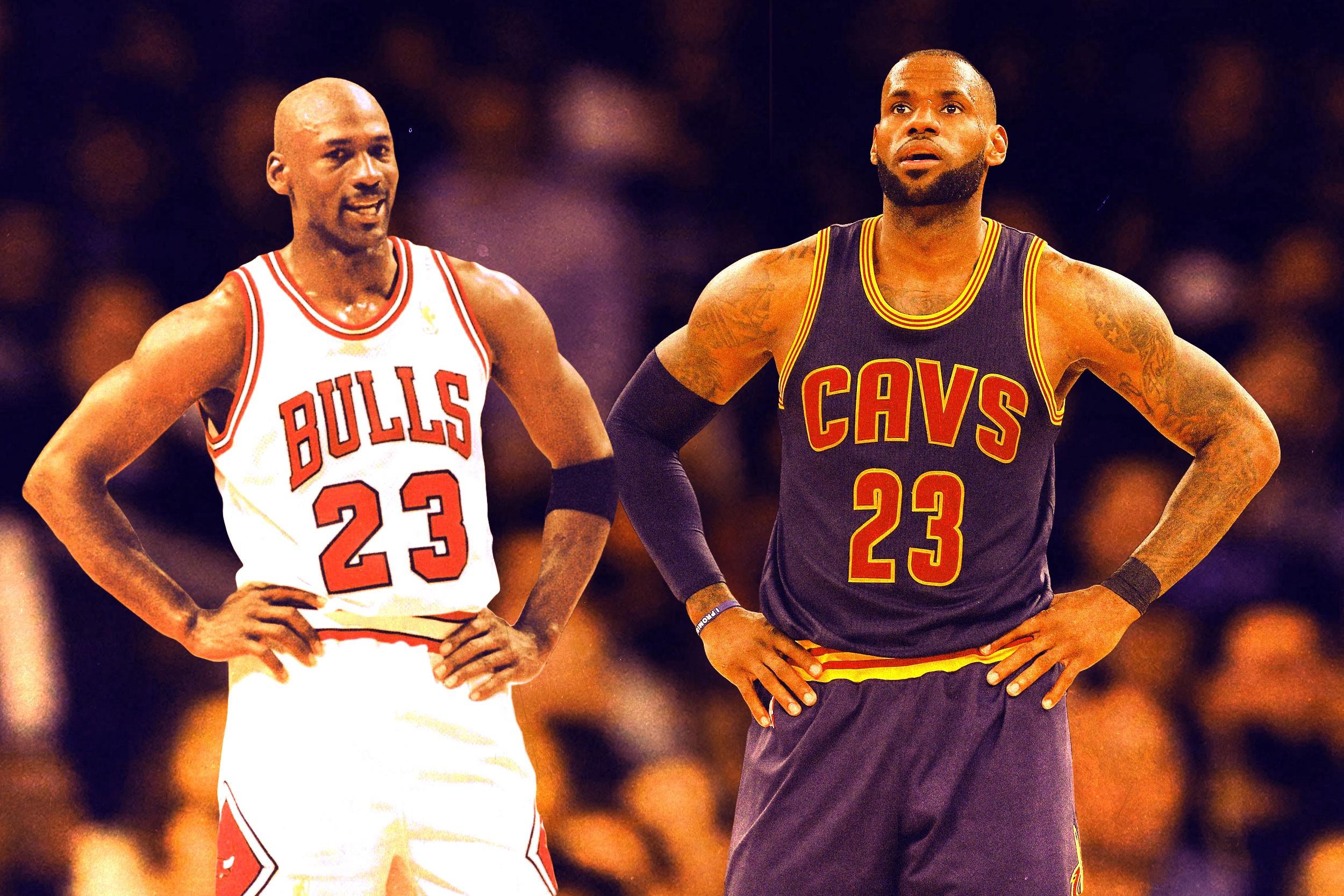
What stands out is that statements like this are rarely meant to deliver a definitive answer. On social media, the more extreme the claim, the farther it travels. Such remarks compel readers to choose sides, respond emotionally, and engage in debate. In that environment, names like Jordan and LeBron are the perfect accelerants for viral controversy.
Ultimately, Trenton R. Thompson’s quote says as much about how online debates operate as it does about basketball itself. Whether fans agree or disagree, one sentence was enough to reignite the GOAT discussion yet again—and as long as the NBA continues to captivate audiences, controversies like this will keep resurfacing, time after time.