
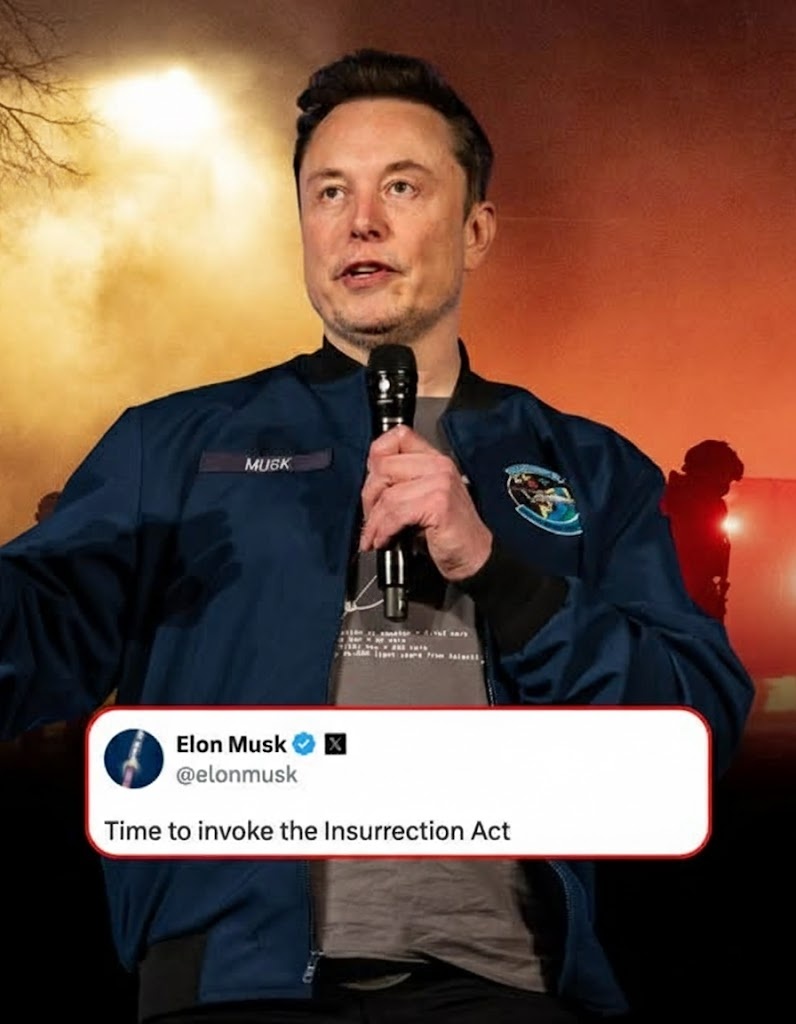
Elon Musk has drawn widespread attention after expressing support for invoking the Insurrection Act amid escalating tensions in Minnesota, particularly in Minneapolis, where protests have turned violent following incidents involving federal immigration enforcement officers. Although Musk is not a political official, his stance has intensified public debate over how the United States should respond to domestic unrest.
Rising tensions in Minneapolis
The unrest began with strong protests against stepped-up federal immigration enforcement, which led to clashes between local residents and federal officers. Tensions escalated after a Minnesota resident was fatally shot by an officer during an immigration-related operation, sparking outrage and drawing large crowds into the streets. As demonstrations grew, confrontations intensified, property damage was reported, and the situation increasingly challenged local authorities’ ability to maintain order.
Against this backdrop, calls for stronger federal action grew louder. Former President Donald Trump publicly threatened to invoke the Insurrection Act, a long-standing federal law that allows the U.S. president to deploy military forces domestically when state and local governments are unable to control widespread violence or unrest.
Musk’s stance and its impact
Amid the mounting chaos, Elon Musk voiced support for invoking the Insurrection Act, arguing that decisive action is necessary to end violence and protect both civilians and federal law enforcement personnel. In online posts and commentary, Musk suggested that the situation had reached a point where extraordinary measures might be required to restore order.
Because Musk is a globally recognized technology entrepreneur rather than a policymaker, his remarks carried unusual weight. Supporters saw his comments as a pragmatic call for stability, while critics accused him of endorsing an excessive use of force and blurring the line between civil governance and military intervention. Within hours, his statements were widely shared, debated, and criticized across social media platforms.

What is the Insurrection Act?
The Insurrection Act of 1807 grants the U.S. president authority to deploy the armed forces or federalize the National Guard within the country to suppress insurrection, domestic violence, or unlawful obstruction that state authorities cannot control. Historically, the law has been used sparingly, most notably during periods of severe civil unrest, because it raises profound concerns about civil liberties and the militarization of domestic law enforcement.
Invoking the act is always controversial. Advocates argue it can be a necessary last resort to protect lives and restore public safety. Opponents warn that it risks escalating conflict, intimidating peaceful protesters, and undermining democratic norms by placing soldiers on American streets.
Divided public reaction
Public response to Musk’s position has been sharply divided.
-
Supporters believe that unchecked violence threatens public safety and that firm federal intervention may be the only way to prevent further bloodshed.
-
Critics argue that invoking the Insurrection Act could suppress legitimate protest, deepen mistrust between communities and the government, and set a dangerous precedent for future crises.
-
Local leaders in Minnesota have largely urged de-escalation, calling for dialogue, accountability, and restraint rather than military involvement.

A broader national debate
Beyond Minnesota, the controversy has reignited a nationwide conversation about immigration enforcement, police accountability, and the limits of federal power. Protests against immigration authorities have spread to other cities, while lawmakers and civil rights groups warn that heavy-handed responses could inflame tensions further.
Conclusion
Elon Musk’s support for invoking the Insurrection Act to end violence in Minnesota underscores the deep divisions in how Americans view security, protest, and government authority. Whether seen as a call for order or an endorsement of overreach, his comments have added fuel to an already volatile debate. As events continue to unfold, the situation in Minnesota has become a focal point for broader questions about how the United States balances public safety with civil liberties during times of crisis.