
Venezuela’s Machado Gives Trump Her Nobel Peace Prize: Is It His Now?
In mid-January 2026, Venezuelan opposition leader María Corina Machado sparked widespread debate after publicly presenting her Nobel Peace Prize to former US president Donald Trump during a meeting in Washington. The gesture immediately raised a controversial question: does this mean the Nobel Peace Prize now belongs to Trump?
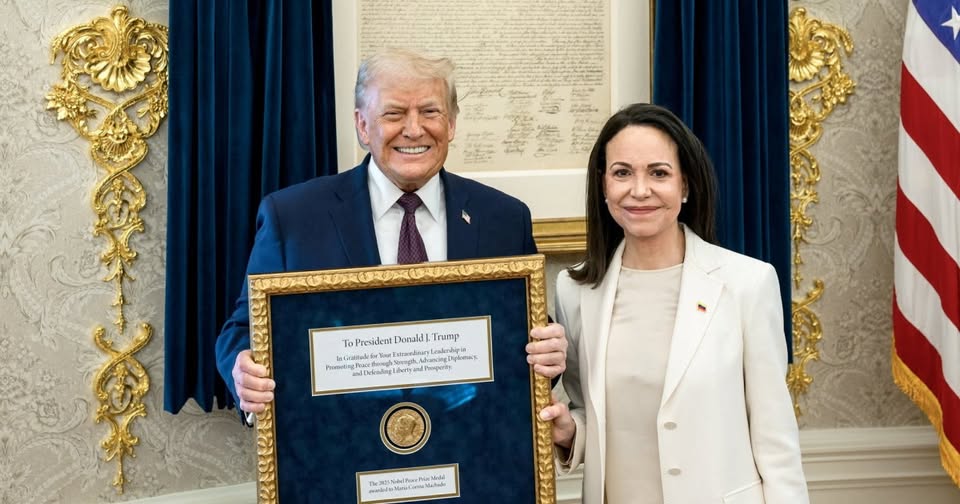
Machado, who has positioned herself as a leading figure in Venezuela’s pro-democracy movement, said the act was symbolic. She described the presentation as a way to acknowledge what she called Trump’s support for democratic change and freedom in Venezuela. Images of Trump smiling while holding a framed certificate and a Nobel medal alongside Machado quickly circulated on social media, fueling global discussion.
However, despite the powerful imagery, the legal and institutional reality behind the Nobel Peace Prize tells a very different story. According to the rules of the Nobel Foundation, a Nobel Prize cannot be transferred, shared, reassigned, or gifted once it has been awarded. This means that regardless of any physical items exchanged or symbolic gestures made, Trump does not become a Nobel Peace Prize laureate as a result of Machado’s action.
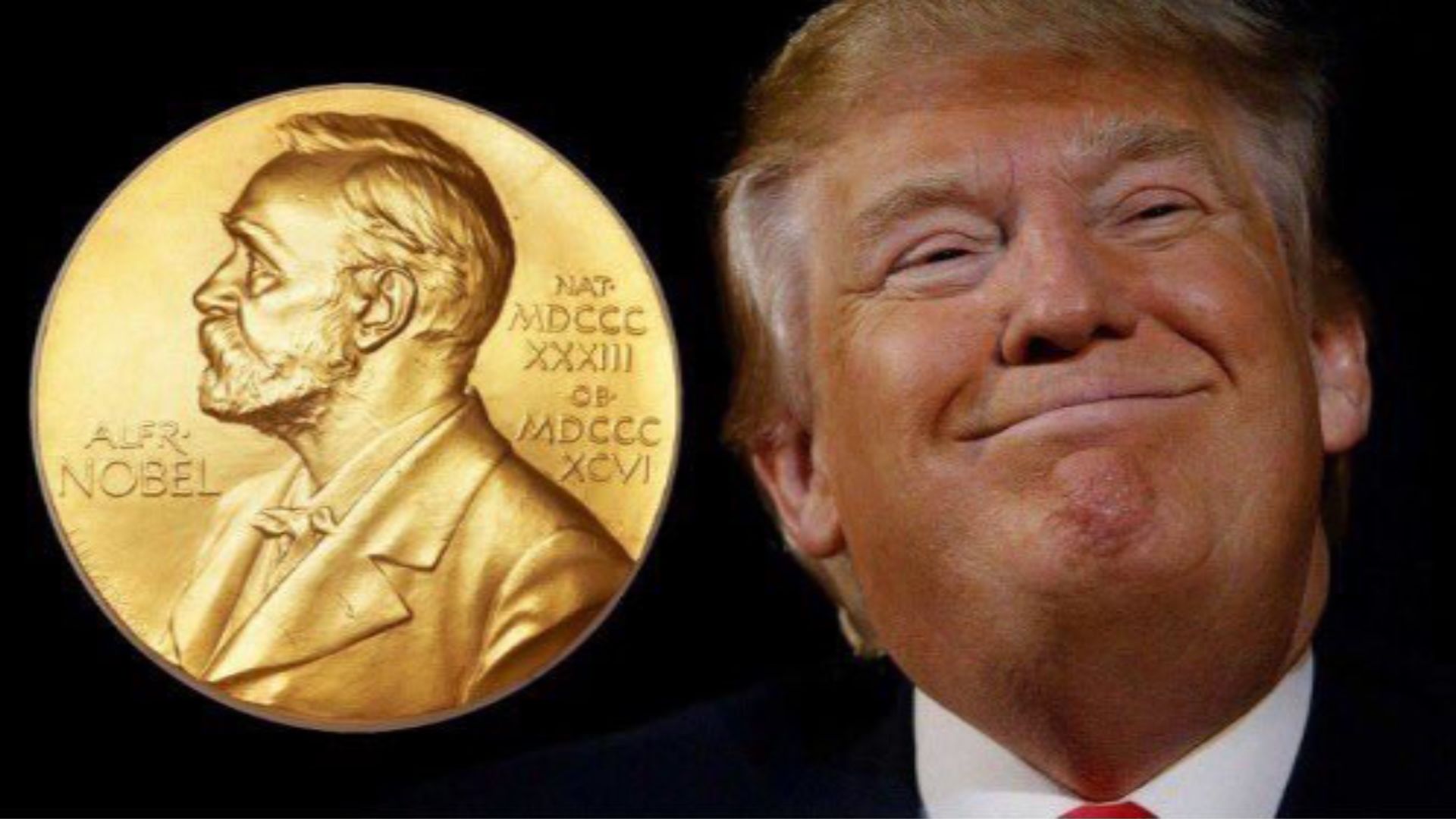
Experts familiar with Nobel procedures emphasize that the prize belongs solely to the individual or organization selected by the Nobel Committee. While recipients are free to donate their medal, diploma, or prize money, such actions carry no official weight and do not alter the original decision of the committee.
Machado’s decision has drawn mixed reactions. Supporters argue that the move was a calculated political statement designed to draw international attention to Venezuela’s ongoing crisis and to strengthen ties with influential figures in the United States. From this perspective, the gesture was less about the Nobel Prize itself and more about symbolism, messaging, and strategic alliances.
Critics, however, have been less forgiving. Some analysts argue that presenting a Nobel Peace Prize in this manner risks undermining the credibility and seriousness of the award. Others say it blurs the line between legitimate recognition and political theater, especially given Trump’s long-standing public interest in receiving the prize himself.
Trump, for his part, appeared receptive to the gesture. He reportedly described the presentation as “a great honor” and praised Machado’s leadership, though he did not explicitly claim to have become a Nobel laureate. Still, the optics of the moment allowed Trump to associate himself—at least visually and rhetorically—with one of the world’s most prestigious honors.

The controversy also highlights broader political dynamics. Machado’s standing within Venezuela has faced challenges amid shifting international positions and internal opposition fragmentation. Observers suggest that the Nobel gesture may serve as an effort to reinforce her international profile and demonstrate relevance on the global stage, particularly with US political leadership.
Ultimately, while the presentation generated headlines and debate, the answer to the central question remains clear: the Nobel Peace Prize does not belong to Donald Trump. The act was symbolic, not official, and carries no legal or institutional recognition from the Nobel Committee.
What remains is the political impact—how such symbolic gestures can shape narratives, influence public perception, and ignite global conversations far beyond the rules that govern formal awards.