
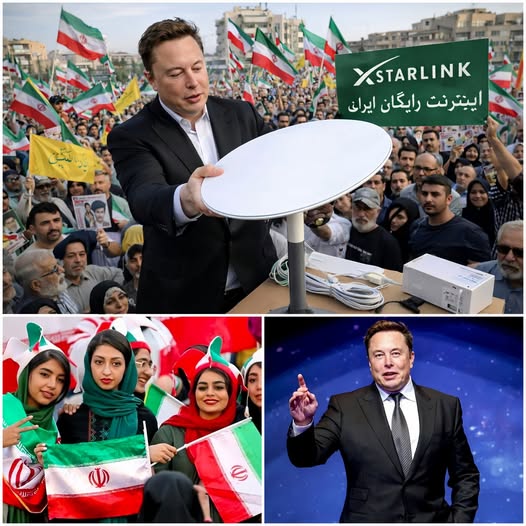
As Iran faces one of the most severe internet blackouts in recent history—linked to nationwide protests and government-imposed restrictions—Elon Musk and his satellite internet service Starlink have drawn global attention with a quiet but impactful move. In mid-January 2026, Starlink internet access was reportedly made available for free in Iran, allowing some citizens to remain online even as the country’s terrestrial networks went dark.
Iran’s fixed-line and mobile internet services were largely shut down as authorities sought to curb the flow of information during escalating unrest. Internet monitoring groups reported connectivity levels plunging close to zero nationwide. In this environment, satellite-based connectivity emerged as one of the few remaining channels for Iranians to communicate with each other and with the outside world.
According to multiple international media reports, SpaceX, the parent company of Starlink, removed subscription fees for Starlink terminals already operating inside Iran. While there was no formal press release or public announcement from SpaceX, activists and users on the ground indicated that Starlink connections were functioning without payment during the blackout period. The absence of official statements only reinforced the perception that the move was deliberate yet discreet.

Starlink has previously played a critical role in crisis zones around the world. During the war in Ukraine, the service was used to maintain communications when conventional infrastructure was damaged or disrupted. It has also been deployed in areas affected by natural disasters, where rapid restoration of connectivity can be lifesaving. In Iran’s case, Starlink provided a means for citizens to share images, videos, and firsthand accounts at a time when state controls severely limited information flows.
However, the situation is far from straightforward. Starlink is officially banned in Iran, and the possession or use of satellite internet equipment can be considered illegal under Iranian law. Users caught operating such devices risk harsh penalties, including accusations related to national security. Iranian authorities have also explored technical measures to interfere with or jam satellite signals, though with limited success so far.
Musk’s approach—enabling access without fanfare rather than launching a public campaign—highlights a growing reality in global politics: private technology companies now wield influence once reserved for states. Satellite internet, in particular, is increasingly seen as both a humanitarian tool and a geopolitical lever, capable of bypassing borders and government controls.

For supporters, the move represents a powerful stand for freedom of information and digital rights, offering ordinary people a lifeline to the global internet when it matters most. Critics, however, argue that such actions can escalate tensions and challenge national sovereignty, raising difficult questions about accountability and regulation.
In the short term, free Starlink access has helped a segment of Iran’s population stay connected during a period of intense isolation. In the longer term, the episode underscores how emerging technologies are reshaping the balance between state control and individual access to information.
Ultimately, as Iran’s internet blackout exposed the fragility of centralized networks, Starlink’s quiet activation served as a reminder that in the modern world, connectivity no longer depends solely on cables and cell towers. With satellites overhead and private actors willing to act, the global struggle over information, technology, and power is entering a new phase.