
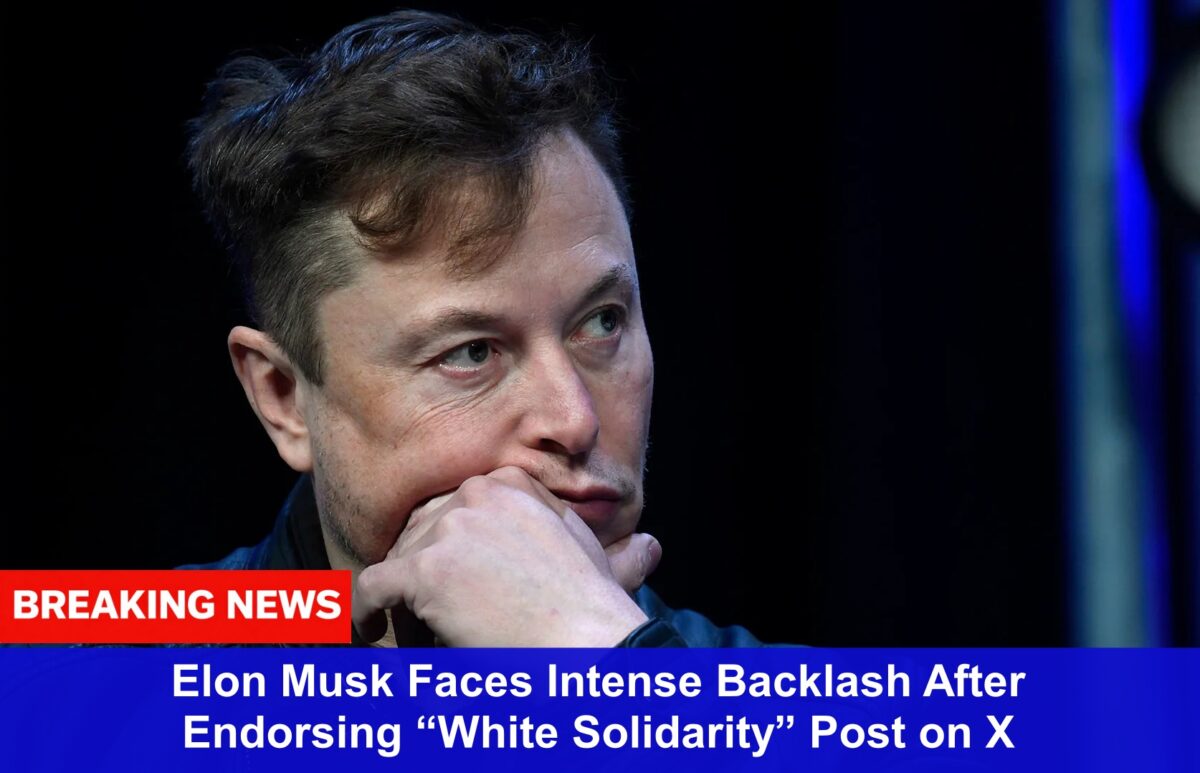
Tech billionaire Elon Musk has once again found himself at the center of global controversy after being seen endorsing a post on the social media platform X that called for “white solidarity.” The move quickly triggered a wave of strong criticism from social media users, civil rights groups, and international media outlets.
According to multiple reports, the post endorsed by Musk was widely perceived as carrying racial undertones and was linked by critics to exclusionary or extremist ideologies. The phrase “white solidarity” is considered highly sensitive in the United States, where discussions surrounding race, equality, and discrimination remain deeply polarized. As a result, Musk’s apparent support for such content raised concerns about the message being conveyed by one of the world’s most influential technology leaders.
Public backlash erupted almost immediately. Across social media platforms, many users accused Musk of crossing a line, particularly given his dual role as both a prominent public figure and the owner of X, a platform used by hundreds of millions of people worldwide. Critics argued that his action risked legitimizing divisive rhetoric and amplifying voices that promote social division.

Civil rights organizations also voiced serious concern. Several groups warned that when a powerful technology executive endorses controversial or racially charged content, it can set a dangerous precedent and contribute to the normalization of extremist viewpoints online. Some activists went as far as calling on advertisers and business partners to reconsider their relationships with X, citing worries about the platform’s direction under Musk’s leadership.
So far, Elon Musk has not issued a detailed public statement directly addressing the specific endorsement. However, in previous controversies, Musk has consistently defended his strong stance on free speech, often criticizing what he views as excessive content moderation and censorship on social media. He has repeatedly argued that a wide range of opinions — even those many people strongly disagree with — should be allowed to exist in a healthy democratic society.
Despite those arguments, analysts note that the boundary between free expression and social responsibility becomes increasingly blurred when influential figures engage with sensitive content. For someone with Musk’s reach and authority, even a single endorsement can carry significant weight and influence public discourse far beyond its original context. What may appear to be a personal action can quickly be interpreted as an implicit political or ideological signal.

This latest incident has reignited broader debates over Musk’s stewardship of X and whether the platform is becoming more permissive toward controversial or extremist narratives. Since Musk acquired the company, critics have repeatedly raised concerns about changes to moderation policies and the overall tone of content circulating on the platform.
As the controversy continues to unfold, many observers are calling for greater clarity from Musk regarding his views and intentions. Whether he chooses to respond directly or maintain his long-standing defense of free speech principles, the episode underscores the growing scrutiny faced by powerful tech leaders and the far-reaching consequences of their actions in an increasingly polarized digital landscape.