
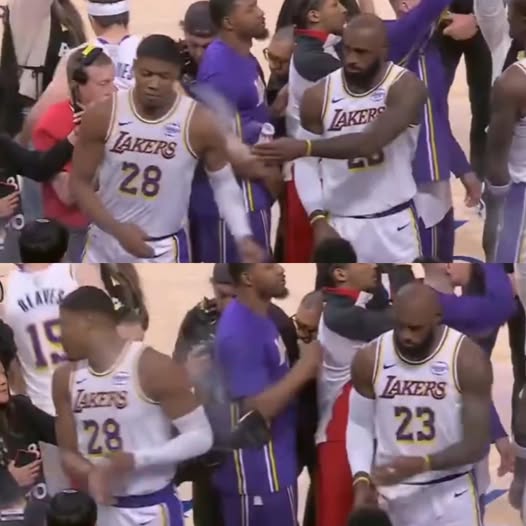
LeBron James once again became the center of social media attention after a viral clip surfaced showing a pregame moment involving the Los Angeles Lakers. In the video, as LeBron prepares to perform his well-known chalk toss ritual—a signature gesture he has done for years—the powder unexpectedly drifts into the face of teammate Rui Hachimura, immediately sparking debate online.
The clip was quickly shared with captions suggesting that LeBron “threw powder into Rui Hachimura’s face” before doing his toss. That framing fueled controversy, especially given LeBron’s massive profile and the constant scrutiny surrounding his behavior. Some viewers criticized the moment as careless or disrespectful, arguing that such an action looked inappropriate, particularly toward a teammate.
However, a closer look at the full context tells a different story. LeBron’s chalk toss has been a long-standing pregame ritual for more than a decade, often performed near the bench or sideline where players and staff are standing close together. In this instance, Hachimura happened to be right next to him, and the chalk drifting toward his face appears to have been completely unintentional. Notably, Hachimura showed no visible signs of anger or discomfort, reacting calmly as the moment passed.
Many fans and analysts have pointed out that short clips like this are frequently edited, cropped, or stripped of context to generate engagement on social media. When only a few seconds are shown, it becomes easy to misinterpret what actually happened. With a figure as prominent as LeBron James, even the smallest moments can be magnified into controversy.
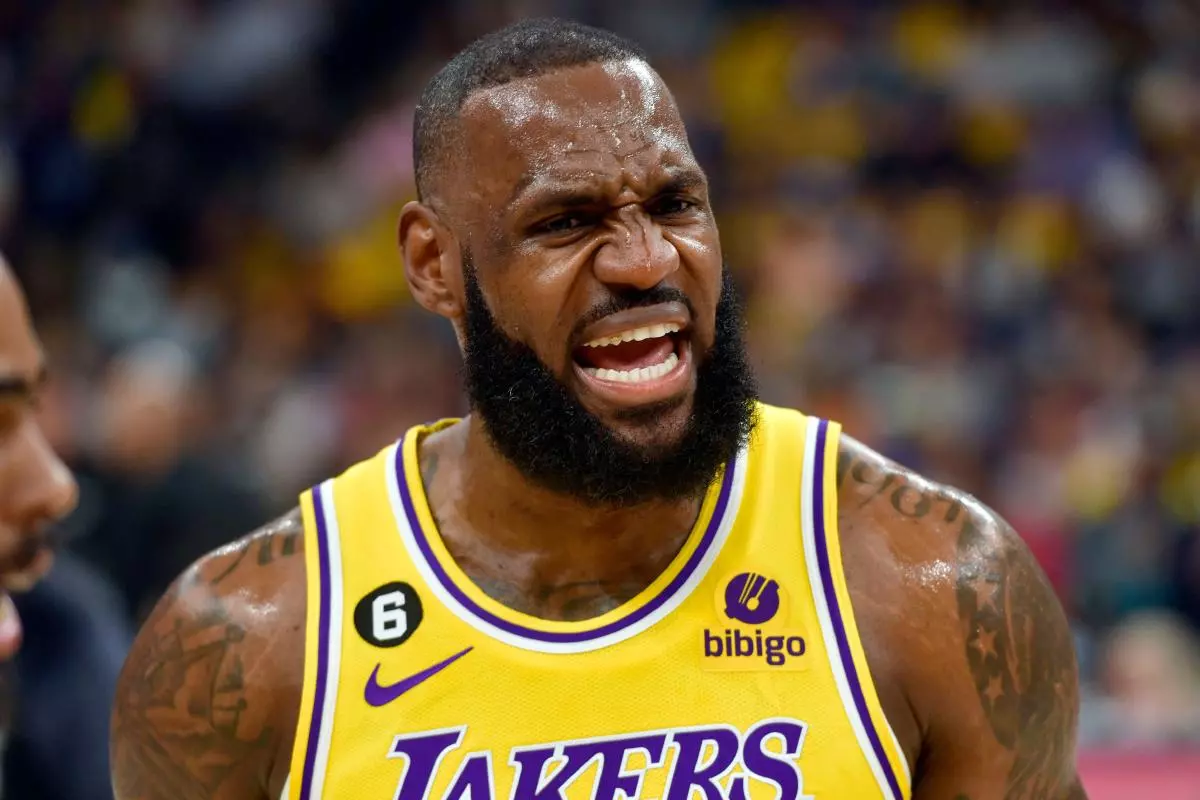
This situation highlights how quickly routine, harmless actions can be transformed into viral drama. For longtime Lakers followers, LeBron’s chalk toss is a familiar and symbolic part of his pregame routine, never intended to target anyone. From that perspective, the incident looks far more like an unfortunate accident than a deliberate act.
Ultimately, the reaction says as much about social media culture as it does about the moment itself. A brief, ordinary interaction was enough to ignite widespread debate, reminding fans how easily narratives can form when context is missing. Rather than signaling internal tension or disrespect, the clip appears to capture nothing more than a split-second mishap before tipoff—one that became controversial only after being reframed online.