
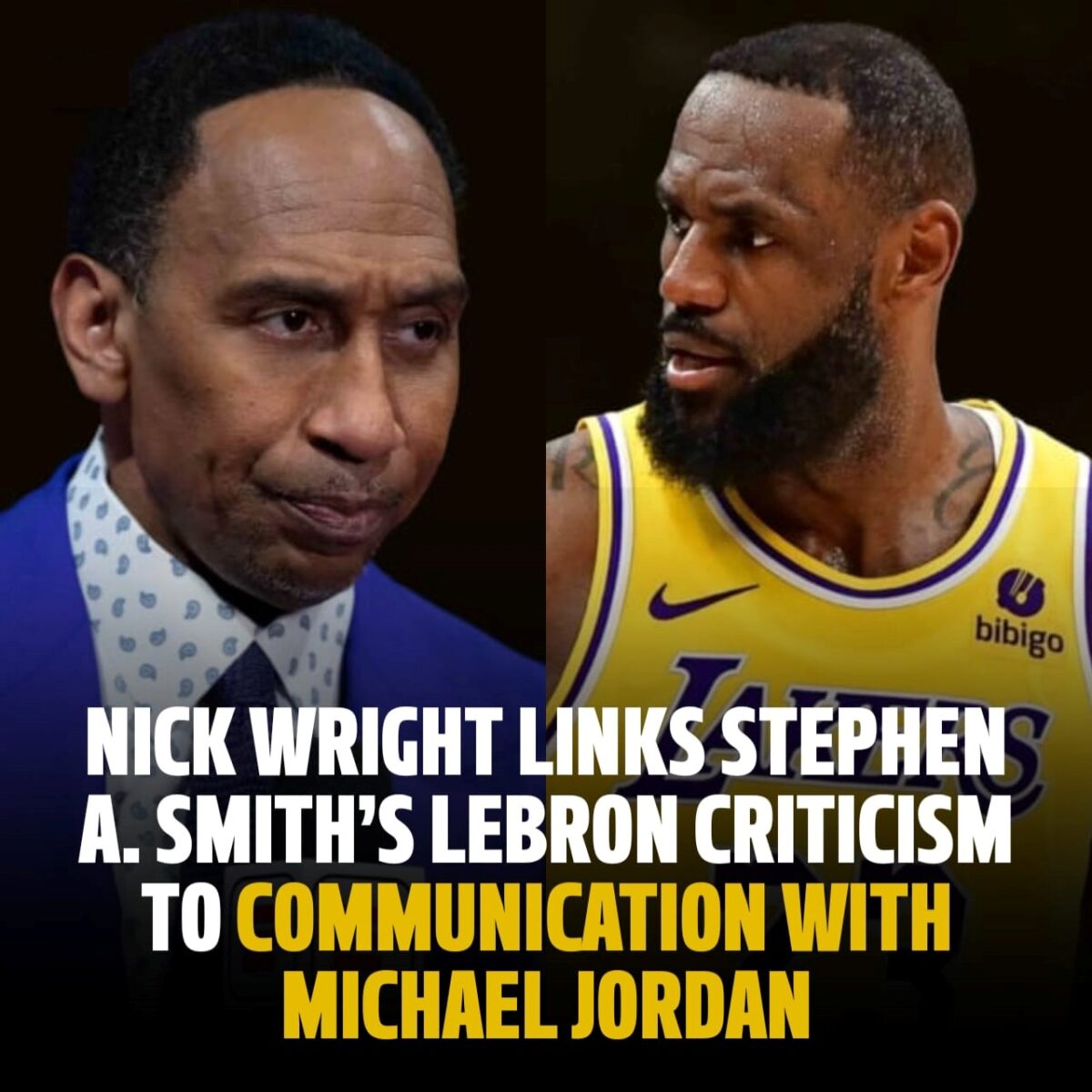
The NBA community is once again in an uproar after Nick Wright, a well-known analyst and one of LeBron James’ most vocal defenders, delivered a provocative claim: Stephen A. Smith’s recent criticism of LeBron may have been influenced by Michael Jordan. A single remark was enough to ignite a heated debate about media influence, behind-the-scenes conversations, and the never-ending GOAT discussion.
According to Wright, Stephen A. Smith has become unusually harsh in his recent commentary on LeBron James. From on-court performance to leadership and overall impact on his team, nearly every aspect of LeBron’s game has been framed in a negative light. What raised Wright’s suspicions is that this shift in tone appeared around the same time Stephen A. Smith was reportedly communicating privately with Michael Jordan.

Wright stopped short of accusing Jordan of directing the narrative. However, he argued that engaging with an icon who holds strong opinions about the GOAT debate could naturally influence how a media personality views and presents the topic. Jordan has long been perceived as resistant to placing LeBron on equal footing in the all-time conversation, and Wright suggested that such perspectives could consciously or unconsciously shape Smith’s commentary.
Unsurprisingly, the claim triggered mixed reactions. Many fans rushed to Stephen A. Smith’s defense, insisting that a veteran journalist of his stature is fully capable of maintaining independent opinions. Others countered that sports media does not operate in a vacuum. Personal relationships, off-camera discussions, and access to powerful figures can—and often do—play a role in how narratives are formed and delivered.
The controversy is further amplified by the complex dynamic between the three figures involved. Nick Wright is widely known for supporting LeBron, Stephen A. Smith is one of LeBron’s most outspoken critics, and Michael Jordan remains the central figure in the GOAT debate. When these three intersect, even the smallest suggestion is enough to spark widespread discussion.

Regardless of its accuracy, Wright’s statement accomplished one thing unmistakably: it shifted the conversation beyond basketball itself. The focus moved from box scores and wins to questions about influence, credibility, and the power behind media narratives. It raises a broader question—when a commentator criticizes a superstar, is it purely personal analysis, or are unseen forces shaping the message?
As of now, there is no concrete evidence that Michael Jordan has directly influenced Stephen A. Smith’s views on LeBron James. Still, in the NBA ecosystem—where storylines often rival the games themselves—such speculation is more than enough to dominate headlines. Once again, the LeBron–Jordan debate has found a new chapter, fueled not by plays on the court, but by voices behind the microphone.